




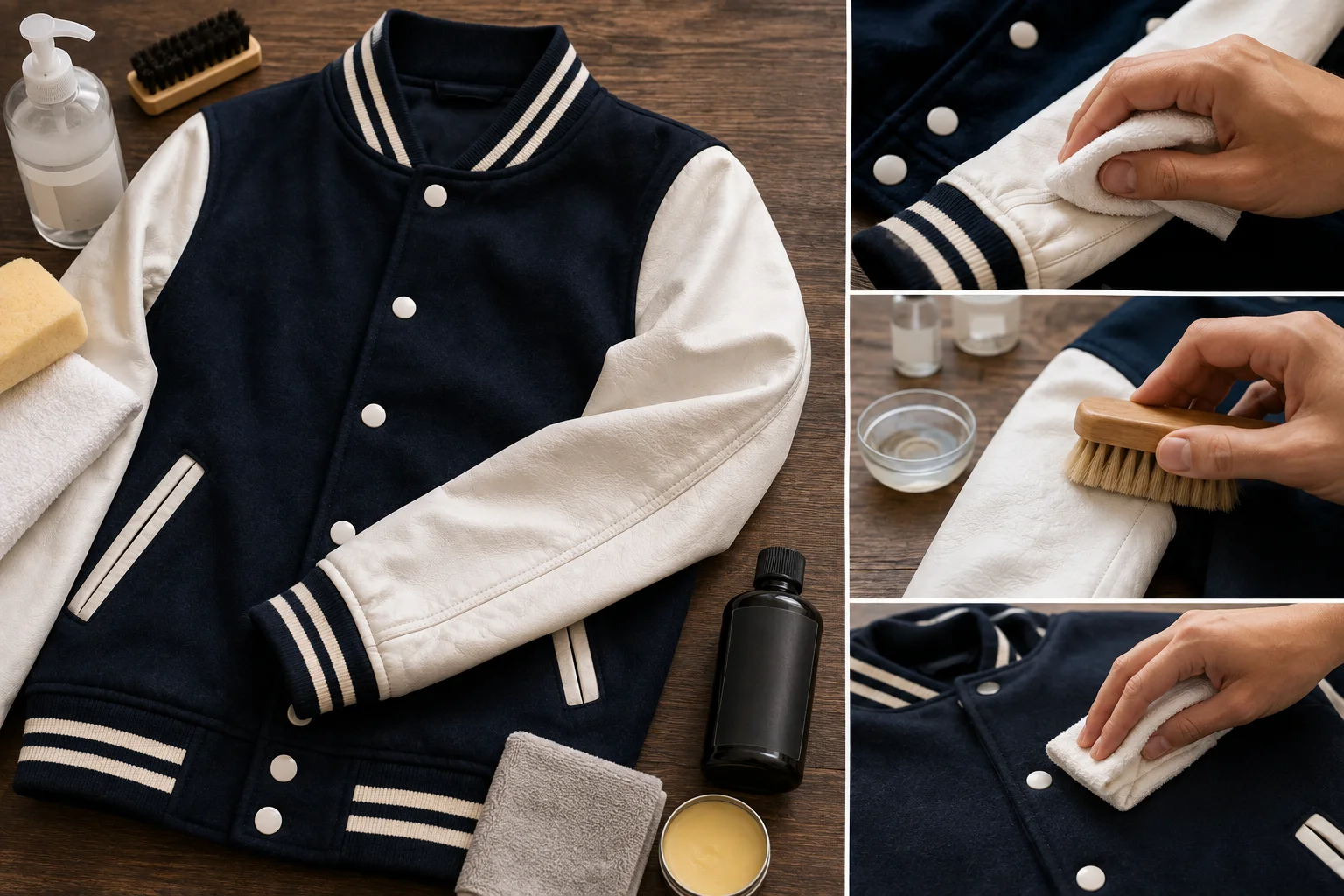
To clean a varsity jacket with leather sleeves, treat each material separately: hand wash or spot-clean the wool or fabric body with a mild detergent, and clean the leather sleeves with a damp cloth and a leather-safe cleaner, followed by a leather conditioner once dry. Never machine wash or dry the jacket, since heat and agitation damage both the wool and the leather.
That’s the short version. Here’s why it actually matters, and how to do each step properly.
I ruined a varsity jacket once. Tossed it in the wash on a normal cycle, figured it was basically just a heavy sweatshirt, and pulled out something with stiff, cracked sleeves and a body that had shrunk half a size. That’s the thing nobody warns you about with these jackets: they’re not one fabric pretending to be tough. They’re two completely different materials stitched together, and each one has its own rules.
So if you’re wondering how to clean a varsity jacket with leather sleeves without wrecking it the way I did, here’s what actually works.
Why This Jacket Needs Two Different Cleaning Approaches
A leather sleeve varsity jacket is really two garments sewn into one. The body’s usually wool or a heavy fleece blend, soft, breathable, but not exactly built to handle water and heat well. The sleeves are genuine leather, which reacts to moisture, soap, and drying in a completely different way than fabric does.
Treat both halves the same way, and you’ll damage at least one of them. That’s really the whole reason varsity jacket care has its own set of rules instead of just following whatever’s on a regular jacket’s tag.
What You’ll Need Before You Start
Nothing complicated here, but having the right stuff on hand makes this a lot less stressful:
A soft microfiber cloth, a suede cleaning brush if your sleeves have any nap to them, a mild leather cleaner made for garment leather (not furniture polish, that’s a different product entirely), a leather conditioner, a gentle wool or fabric-safe detergent, and lukewarm water. That’s genuinely most of it. Skip the household cleaners sitting under your sink. Anything with alcohol or strong solvents in it will dry out leather faster than you’d think.
Cleaning the Wool or Fabric Body
Start here, since it’s the more forgiving half of the jacket.
Check the care label first. Some wool bodies can handle a gentle hand wash, others really do need dry cleaning only, and there’s no way to know for sure without checking.
Spot-treat stains as they happen. Dab, don’t rub, using a cloth dampened with a little water and mild detergent. Rubbing tends to push the stain deeper into the fibers instead of lifting it out.
Hand wash if the label allows it. Lukewarm water, a small amount of wool-safe detergent, gentle agitation. No wringing, no twisting, just press the water out gently.
Skip the dryer completely. Heat is genuinely the enemy of a wool varsity body. It shrinks fibers and can warp the whole shape of the jacket, which is basically what happened to mine.
Cleaning the Leather Sleeves
This is where most of the actual risk lives, so take your time here.
Dust it off first. Before anything wet touches the leather, brush away surface dirt with a dry microfiber cloth or a suede brush if there’s any texture to the material.
Spot clean, don’t soak. This is the golden rule of how to clean leather sleeves properly. Dampen a cloth with a small amount of mild leather cleaner, work it gently over the area, then wipe away any residue with a clean, dry cloth. Leather absorbs moisture fast, so less is genuinely more here.
Condition after cleaning. Once the leather’s fully dry, work in a thin layer of leather conditioner. This replaces natural oils the cleaning process strips out and keeps the sleeves from cracking or stiffening over time, this step alone is what separates a sleeve that lasts ten years from one that’s brittle in two.
Never machine wash or dry the leather portion. Not even on a delicate cycle. Machine washing is essentially the number one way a leather varsity jacket cleaning attempt goes wrong.
Drying and Storing It Properly
Once both halves are clean, how you dry and store the jacket matters just as much as how you cleaned it.
Air dry away from direct heat. Lay the jacket flat or hang it somewhere with good airflow, but keep it away from radiators, heating vents, or direct sun. Fast, high-heat drying is what causes leather to stiffen and wool to lose its shape.
Use a padded hanger for storage. Wire hangers create pressure points at the shoulders over time, which eventually shows up as stretched or misshapen seams.
Keep it in a breathable garment bag. Plastic traps moisture, which is bad news for leather especially. A cotton or canvas bag lets the material breathe while still keeping dust off.
Store it somewhere cool and dry. Basements and attics tend to swing in humidity and temperature more than a closet does, which isn’t ideal for either material over the long run.
How Often Should You Actually Clean It?
Honestly, less often than you’d think. Spot-clean stains the moment they happen rather than waiting. Beyond that, a full clean once or twice a season is usually plenty for a jacket in regular rotation. Over-cleaning, especially over-conditioning the leather, can actually do more harm than good, since too much product buildup attracts dirt rather than repelling it.
Common Mistakes That Ruin These Jackets
A few things come up again and again, so it’s worth calling them out directly. Machine washing the whole jacket is the big one, and it’s exactly what happened to mine. Using regular laundry detergent on leather is another, since it strips natural oils the material needs. Skipping leather protection entirely and letting sleeves dry out over a few seasons is a slower mistake, but it adds up the same way. And ignoring small stains until they’ve set in makes them significantly harder to remove later, sometimes permanently.
Why Quality Construction Makes Care Easier
Here’s something worth mentioning: not every varsity jacket handles cleaning equally well. At Royalex Leather, our Varsity Jackets collection is handcrafted with genuine leather sleeves and double-stitched seams specifically because that combination holds up better through repeated care over the years. A premium varsity jacket built with real materials responds to conditioning and spot cleaning the way it’s supposed to. Lower-quality bonded leather or synthetic blends often don’t, no matter how carefully you follow the steps above.
We ship across the USA and worldwide, and every jacket we build is meant to handle years of wear, not just a season or two, provided it’s cared for the way we’ve laid out here.
Frequently Asked Questions
Can I machine wash a varsity jacket with leather sleeves?
No. Machine washing damages both halves of the jacket, shrinking or warping the wool body and cracking or stiffening the leather sleeves. Hand washing the fabric body and spot cleaning the leather is the safer route.
How do I clean leather sleeves without damaging them?
Use a mild leather cleaner on a damp cloth, work it in gently, wipe away residue, then let it air dry fully before applying a leather conditioner to restore lost oils.
How often should I condition the leather sleeves?
A couple of times per season is usually enough for a jacket in regular use. Over-conditioning can actually attract more dirt than it prevents, so more isn’t always better here.
What’s the best way to store a varsity jacket?
Hang it on a padded hanger inside a breathable garment bag, kept somewhere cool and dry, away from direct sunlight or heat sources.
Can I use regular soap on leather sleeves?
It’s best to avoid it. Regular soap and household cleaners often strip natural oils from leather, leading to cracking over time. A cleaner made specifically for garment leather is a safer choice.
Does Royalex Leather ship varsity jackets to the USA and worldwide?
Yes. Royalex Leather ships genuine leather-sleeve varsity jackets across the USA and worldwide, built to hold up well when cared for properly.
