




The warmest winter coat for genuinely extreme cold is generally a shearling coat, thanks to its natural sheepskin wool lining paired with a leather shell that blocks wind almost entirely. Down jackets come close and often win on warmth-to-weight ratio, packing serious insulation into a lighter package, while wool coats trail both in raw warmth but offer better breathability for milder winter days. Which one is actually “warmest” for you depends on the kind of cold you’re dealing with, dry and windy, wet and damp, or just consistently below freezing, since each material performs differently depending on the conditions.
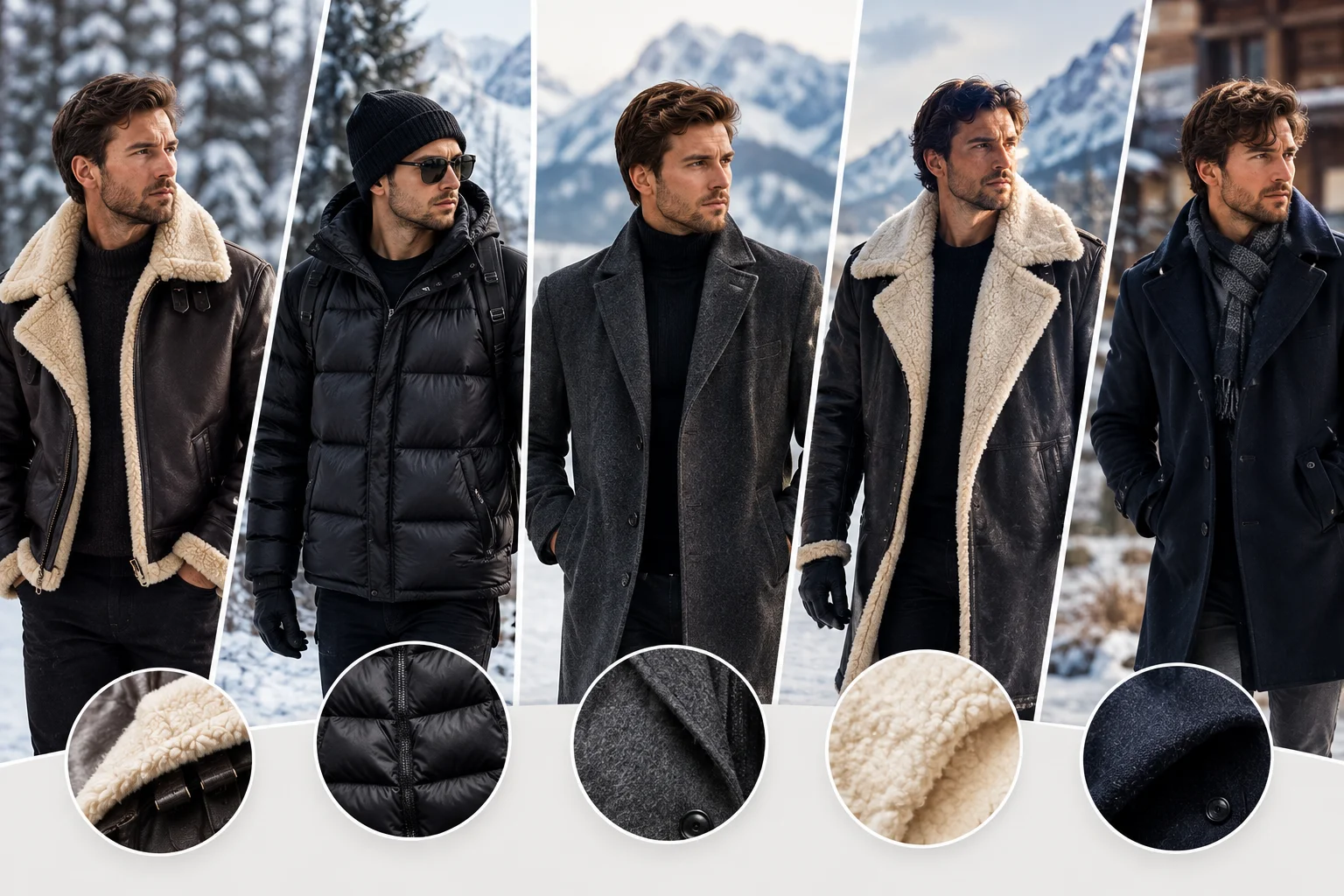
That’s the short version. Here’s how each option actually compares, and which one makes sense for different climates and needs.
Why “Warmest” Isn’t a Single, Simple Answer
Before comparing materials directly, it’s worth explaining why this question doesn’t have one universal answer. Warmth in cold-weather clothing comes down to a combination of factors, how well a material traps air (since trapped air, not the material itself, is what actually insulates), how well it blocks wind, and how it performs when it gets damp. A material that excels in dry, freezing conditions can perform quite differently in a wet, windy climate, which is exactly why shearling, down, and wool each have genuine advocates depending on where someone actually lives.
Shearling Coats: The Warmest All-Around Option
A shearling coat combines genuine sheepskin wool with a leather exterior, and that combination is hard to beat for consistent, all-weather warmth. The wool traps a substantial layer of warm air against the body, functioning similarly to how down works, while the leather shell adds something down alone can’t offer: strong wind resistance and structure that holds up in genuinely harsh conditions.
This is really why a warmest shearling coat tends to top most cold-weather comparisons. It performs well in dry cold, resists wind effectively thanks to the leather exterior, and holds its insulating properties even after years of wear, provided it’s properly cared for. The trade-off is weight, shearling is noticeably heavier than a down jacket offering similar warmth, and it typically costs more upfront.
Down Jackets: Best Warmth-to-Weight Ratio
A down jacket uses the soft under-feathers of ducks or geese, prized specifically for trapping an enormous amount of air relative to how little the material itself weighs. This is why down remains the go-to choice for extreme mountaineering and expedition gear, it delivers exceptional thermal insulation without the bulk or weight of other materials.
The catch with down is moisture. Once wet, down loses much of its insulating ability almost immediately, since the feathers clump together and can no longer trap air effectively. For dry, cold climates, down performs brilliantly. For damp, rainy winters, it needs a genuinely waterproof outer shell to perform reliably, or it becomes considerably less effective exactly when you need it most.
Wool Coats: Warmth With Better Breathability
A wool coat offers solid warmth without the bulk of shearling or the moisture vulnerability of down. Wool has a genuinely useful property, it retains a meaningful amount of its insulating capability even when damp, unlike down, which makes it a dependable choice for climates with frequent rain or wet snow rather than dry, bitter cold.
Wool generally isn’t the warmest option for truly extreme temperatures, but it offers better breathability than shearling or heavily insulated down jackets, making it a strong choice for milder winter days or situations involving a lot of movement, commuting, walking, errands, where overheating in a heavier coat becomes its own kind of problem.
Insulated Winter Coats: The Synthetic Alternative
An insulated winter coat using synthetic fill, rather than down or natural wool, offers a middle-ground option worth mentioning. Synthetic insulation doesn’t trap quite as much warmth per ounce as down, but it retains most of its insulating properties even when wet, addressing down’s biggest weakness directly. It’s also generally more affordable and easier to care for than genuine shearling or wool.
For anyone dealing with unpredictable, frequently wet winter conditions who still wants strong warmth without the higher cost of shearling, synthetic insulation is a reasonable middle path between down’s warmth and wool’s moisture resistance.
Best Winter Coat for Extreme Cold
For genuinely extreme cold, dry, well below freezing, with real wind exposure, shearling generally has the edge. The combination of dense natural wool insulation and a wind-blocking leather exterior handles this specific scenario better than most alternatives. High-fill-power down comes a close second, particularly for anyone prioritizing weight and mobility over the added structure and durability shearling offers.
For best coat for freezing temperatures in a drier, colder climate specifically, either option performs well, the deciding factor usually comes down to personal preference around weight, structure, and whether you want a coat that also functions as a genuine style statement, which shearling does more naturally than most down jackets.
Best Winter Coat for Snow
Snow introduces moisture into the equation, which changes the calculation somewhat. For best winter coat for snow, especially wet, heavy snow rather than light, dry powder, a shearling coat’s leather exterior offers a real advantage, since leather resists surface moisture far better than the fabric shells used on most down jackets. Wool performs reasonably well here too, given its ability to retain some insulating capacity even when damp.
Down remains a strong option for snow specifically when paired with a genuinely waterproof or highly water-resistant outer shell, but without that protection, it’s more vulnerable in consistently snowy conditions than either shearling or wool.
Warmest Leather Winter Coat: What to Look For
If you’ve decided leather is the direction you want to go, not every warmest leather winter coat performs equally. Look specifically for genuine shearling lining rather than a synthetic faux-fur substitute, since real sheepskin wool insulates meaningfully better than most synthetic alternatives. Full-grain leather on the exterior holds up better over time and blocks wind more effectively than lower-grade, heavily processed leather. And a properly structured collar, ideally one that can be turned up, adds meaningful extra protection around the neck, a spot that loses heat quickly if left exposed.
Warm Winter Coats for Men: Matching the Coat to Your Climate
For anyone shopping specifically for warm winter coats for men, matching the coat to your actual climate matters more than chasing the single “warmest” option on paper. Dry, cold, windy climates favor shearling. Extreme cold with an emphasis on packability and mobility favors high-fill-power down. Wet, temperamental winters favor wool or a properly waterproofed insulated coat. There’s rarely a single universally correct answer, the right coat is the one that performs well in the specific conditions you’re actually dealing with most often.
Why Genuine Shearling Remains a Top Choice for Serious Cold
Insulation science backs up why natural wool performs so consistently well in cold weather, it’s the trapped air within the wool fibers, not the material itself, that provides the bulk of the warmth, a principle covered in general terms in Wikipedia’s overview of thermal insulation. Genuine shearling takes full advantage of that principle while adding a durable, wind-resistant leather shell on top, which is exactly why it remains one of the most consistently recommended materials for anyone facing real winter conditions rather than a mild, occasional cold snap.
Shop Genuine Shearling Coats at Royalex Leather
If you’ve decided shearling is the direction for your climate, our Leather Coats collection at Royalex Leather is built from genuine leather with real sheepskin insulation, designed to handle serious cold without losing its shape season after season. Looking for a shorter, more versatile silhouette in the same material? Our Men’s Shearling Jackets collection covers that ground too, and our Women’s Flight Jackets line carries the same warmth in cuts built for a female fit.
Royalex Leather ships across the USA and worldwide, so wherever winter actually hits hardest for you, genuine cold-weather protection isn’t out of reach. You can also browse our full collection for everything else we handcraft.
Frequently Asked Questions
What is the warmest material for a winter coat?
Genuine shearling, combining natural sheepskin wool with a leather exterior, is generally considered one of the warmest options for extreme, dry cold, while high-fill-power down offers the best warmth-to-weight ratio for lighter, more packable insulation.
Is a down jacket or a shearling coat warmer?
Both offer excellent warmth, but they perform differently. Down offers superior warmth relative to its weight, while shearling adds better wind resistance and holds its insulating properties better in genuinely harsh, blustery conditions.
What’s the best winter coat for wet, snowy climates?
Shearling’s leather exterior resists surface moisture well, and wool retains some insulating capacity even when damp, making both stronger choices than unprotected down for consistently wet or snowy winters.
Are wool coats as warm as shearling or down?
Generally, no. Wool coats tend to offer solid warmth for milder winter days but usually fall short of shearling or high-quality down for genuinely extreme cold, though they offer better breathability in exchange.
Does Royalex Leather ship genuine shearling coats internationally?
Yes. Royalex Leather ships genuine leather and shearling coats across the USA and worldwide.
