




Vintage Carhartt jackets were made in both duck canvas and denim, and which one you’re looking at depends entirely on the model and the year it was produced. Carhartt’s earliest catalog described its products as made “exclusively of denim and duck canvas,” and several of the brand’s most iconic styles, including the Detroit Jacket and the Chore Jacket, actually launched in denim before switching over to the heavyweight cotton duck canvas the brand is best known for today. So there’s no single correct answer, it genuinely comes down to which jacket and which era you’re asking about.
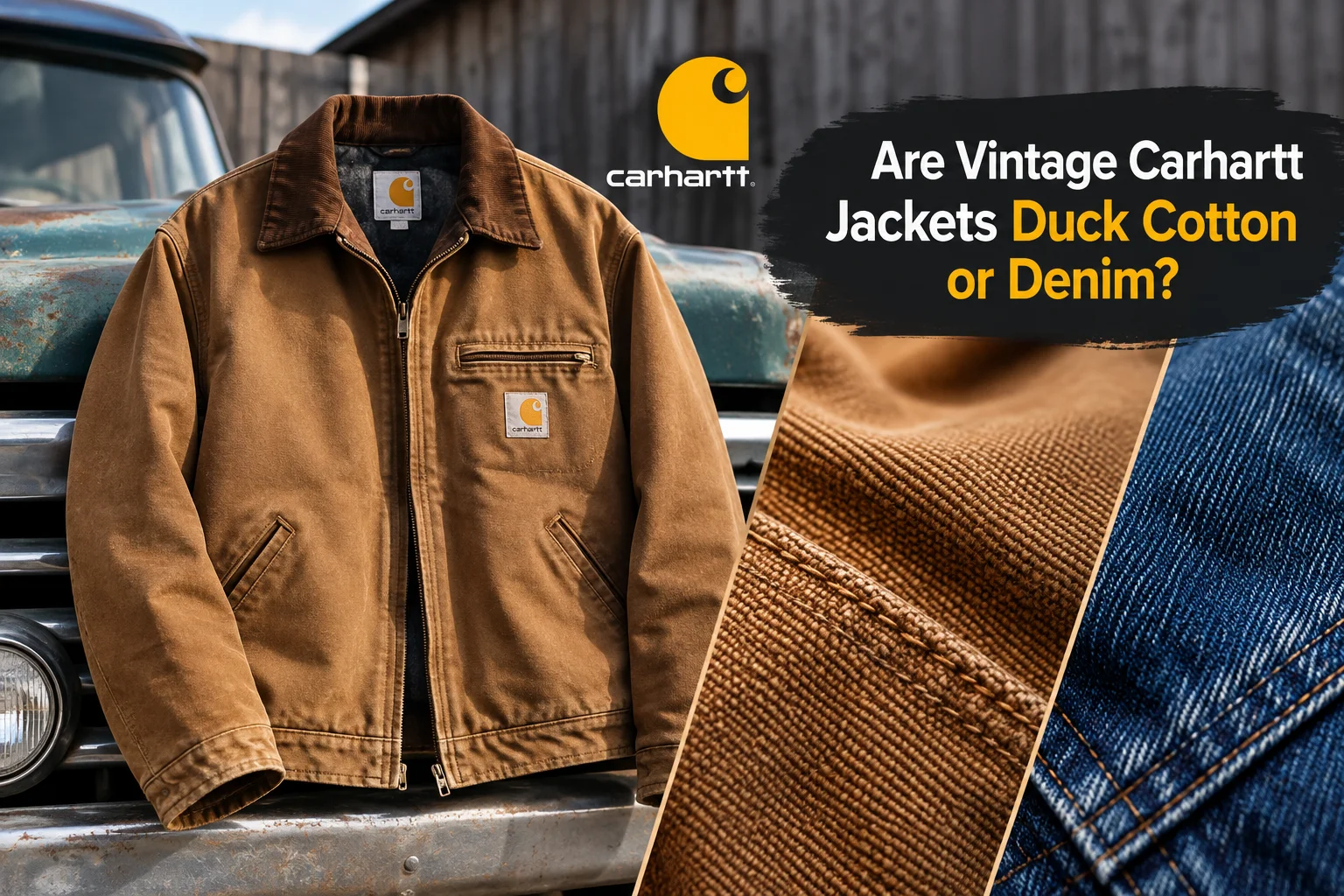
That’s the short version. Here’s the actual history behind each fabric, and how to tell which one you’re looking at.
Carhartt’s Roots: Denim and Duck Canvas From Day One
Carhartt’s story starts in 1889 in Detroit, when Hamilton Carhartt began producing durable clothing specifically for railroad workers. From the very beginning, the company worked with both cotton duck canvas and denim, rather than committing to one fabric exclusively. This is really the root of the confusion people run into today, Carhartt wasn’t a single-fabric brand that later diversified, it started with both materials in rotation and gradually leaned harder into duck canvas as certain styles became signature pieces.
What Is Duck Canvas, and Why Did Carhartt Lean Into It?
Cotton duck canvas is a tightly woven, heavyweight cotton fabric known for its durability and abrasion resistance, originally developed for sails and heavy-duty applications before workwear brands adopted it. It’s noticeably stiffer than denim when new, almost cardboard-like to the touch, and it softens gradually through wear rather than through washing. That toughness is exactly why it became so closely associated with Carhartt workwear, it held up to genuinely hard labor in a way lighter fabrics couldn’t match.
Over time, duck canvas became the material most people picture when they think “Carhartt,” to the point where a lot of newer fans assume it’s the only fabric the brand ever used.
Which Vintage Carhartt Jackets Were Made in Denim?
Quite a few, actually, particularly in their earliest iterations. The Carhartt Detroit Jacket, one of the brand’s most recognized silhouettes, was originally released in 1954 in blue denim. The switch to the now-famous 12-ounce duck canvas didn’t happen until the following year, 1955, meaning the very first Detroit Jackets that hit the market were denim, not duck.
The Carhartt Active Jacket, introduced in 1975, followed a similar path, launching in denim with a flannel lining before later transitioning to the duck canvas version most people associate with the style today. Even the brand’s Chore Jacket, dating back to 1923, started life in blue denim before the switch to the duck brown canvas that eventually became its signature look.
There’s also the Carhartt Dayton Trucker Jacket, which is essentially the brand’s own take on the classic denim trucker silhouette, built with Carhartt’s heavier workwear construction layered onto a fundamentally denim-based design.
Vintage Carhartt Duck Jacket: What to Look For
If you’re specifically hunting for a vintage Carhartt duck jacket, a few identifying details help confirm what you’re looking at. Genuine Carhartt duck canvas jacket pieces have a distinctly stiff, rigid feel when unworn, with a visible tight weave that’s noticeably different from denim’s diagonal twill pattern. Color is another giveaway, classic duck canvas Carhartt jackets are most commonly found in brown, sandstone, or moss tones, rather than the blue most associated with denim.
Construction details matter too. Triple-stitched seams, corduroy collars, and reinforced pockets with copper rivets show up across both fabric types, but they’re especially associated with the duck canvas Chore and Detroit Jacket lines that built the brand’s reputation for durability.
Vintage Carhartt Denim Jacket: What to Look For
A vintage Carhartt denim jacket, by contrast, will show the diagonal twill weave typical of denim, along with the fading and whiskering patterns denim is known for developing with wear. Because Carhartt’s earliest production runs of styles like the Detroit Jacket used denim before switching to duck, genuinely early examples in denim tend to be rarer and more sought-after by collectors specifically because of how briefly that version was in production before the fabric switch.
The Dayton Trucker Jacket remains one of the more reliably denim-based options if you’re specifically after this fabric within Carhartt’s catalog, since it wasn’t part of the same duck-canvas transition that affected the Detroit and Active Jacket lines.
Duck Canvas vs. Denim: How the Two Actually Compare
Since duck canvas vs. denim comes up constantly in these conversations, it’s worth a direct comparison. Duck canvas is heavier and stiffer initially, offers stronger abrasion resistance, and tends to hold its shape better over years of hard use. It’s the fabric most associated with genuine workwear durability. Denim, meanwhile, is more flexible from the start, develops fading and character faster through wear, and generally feels more familiar and casual to most people, since it’s the same base fabric used in jeans.
Neither fabric is objectively better, they’re suited to slightly different priorities. Duck canvas leans toward maximum durability and a worn-in patina that develops slowly over years. Denim leans toward flexibility and a faster, more visible character development, the kind of fading collectors specifically look for in older pairs of jeans.
Caring for Vintage Fabric, Whichever You’ve Got
Both materials reward a bit of care, though the approach differs slightly. Duck canvas generally shouldn’t be over-washed, since frequent washing can strip the wax or sanforized finish many vintage pieces were treated with, and its rigid character is meant to soften through wear rather than laundering. Spot cleaning and infrequent, gentle washes tend to preserve a vintage duck canvas piece far better than regular machine washing would.
Denim is a bit more forgiving, but vintage examples still benefit from cold washes on a gentle cycle, turned inside out to protect any fading or whiskering patterns that have developed over decades. Both fabrics should be air-dried rather than tumble-dried, since heat is one of the fastest ways to damage vintage stitching, shrink the garment unevenly, or accelerate wear at already-stressed seams.
Old Carhartt Jackets: Why the Fabric Debate Matters to Collectors
For anyone chasing old Carhartt jackets specifically for collecting or resale, knowing the fabric history isn’t just trivia, it directly affects value and authenticity. A genuinely early denim Detroit Jacket, for instance, represents a very specific, short production window before the switch to duck canvas, which makes it considerably rarer than the duck canvas version that followed and stayed in production for decades afterward. According to Gear Patrol’s coverage of the Detroit Jacket’s history, the jacket wasn’t even officially called the “Detroit Jacket” until 1998, decades after its 1954 denim debut, underscoring just how much the model evolved before settling into the design most people recognize today.
Bringing That Same Workwear Durability Into Denim Today
Whether Carhartt’s history leans toward denim or duck canvas depends on the exact style and year, but the underlying philosophy stayed consistent throughout, build it heavy, build it to last, and let the fabric earn its character through actual wear rather than artificial distressing. That same principle guides how we build denim outerwear at Royalex Leather. Real, heavyweight construction, reinforced stitching, and materials chosen for how they age rather than how they look on day one.
Shop Workwear-Inspired Denim Jackets at Royalex Leather
If this deep dive into Carhartt’s history has you in the mood for a genuinely rugged denim piece, our Denim Jackets collection at Royalex Leather is built with that same heavyweight, durability-first mindset that made vintage workwear so enduring. Prefer leather over denim? Our Biker Jackets and Leather Coats collections carry that same construction philosophy in genuine hide. Browsing more broadly? Check our full Men’s Jackets line for everything in between.
Royalex Leather ships across the USA and worldwide, so wherever you’re building your wardrobe from, genuinely durable outerwear isn’t far out of reach. You can also browse our full collection for everything else we handcraft.
Frequently Asked Questions
Were vintage Carhartt jackets made of denim or duck canvas?
Both, depending on the model and year. Several iconic styles, including the Detroit Jacket and Chore Jacket, originally launched in denim before switching to duck canvas, which later became Carhartt’s signature fabric.
What is Carhartt duck canvas made of?
Duck canvas is a tightly woven, heavyweight cotton fabric known for its durability and abrasion resistance. It’s stiffer than denim initially and softens gradually through wear rather than washing.
Which Carhartt jacket is the most iconic duck canvas style?
The Detroit Jacket is widely considered Carhartt’s most recognizable duck canvas piece, though it originally launched in denim in 1954 before switching to 12-ounce duck canvas in 1955.
Are early denim Carhartt jackets rarer than duck canvas versions?
Generally, yes. Because several styles transitioned from denim to duck canvas relatively early in production, genuine early denim examples represent a shorter production window and tend to be rarer among collectors.
Does Royalex Leather sell denim jackets inspired by vintage workwear?
Yes. Royalex Leather’s Denim Jackets collection is built with the same heavyweight, durability-focused construction that defined classic vintage workwear, and we ship across the USA and worldwide.
