




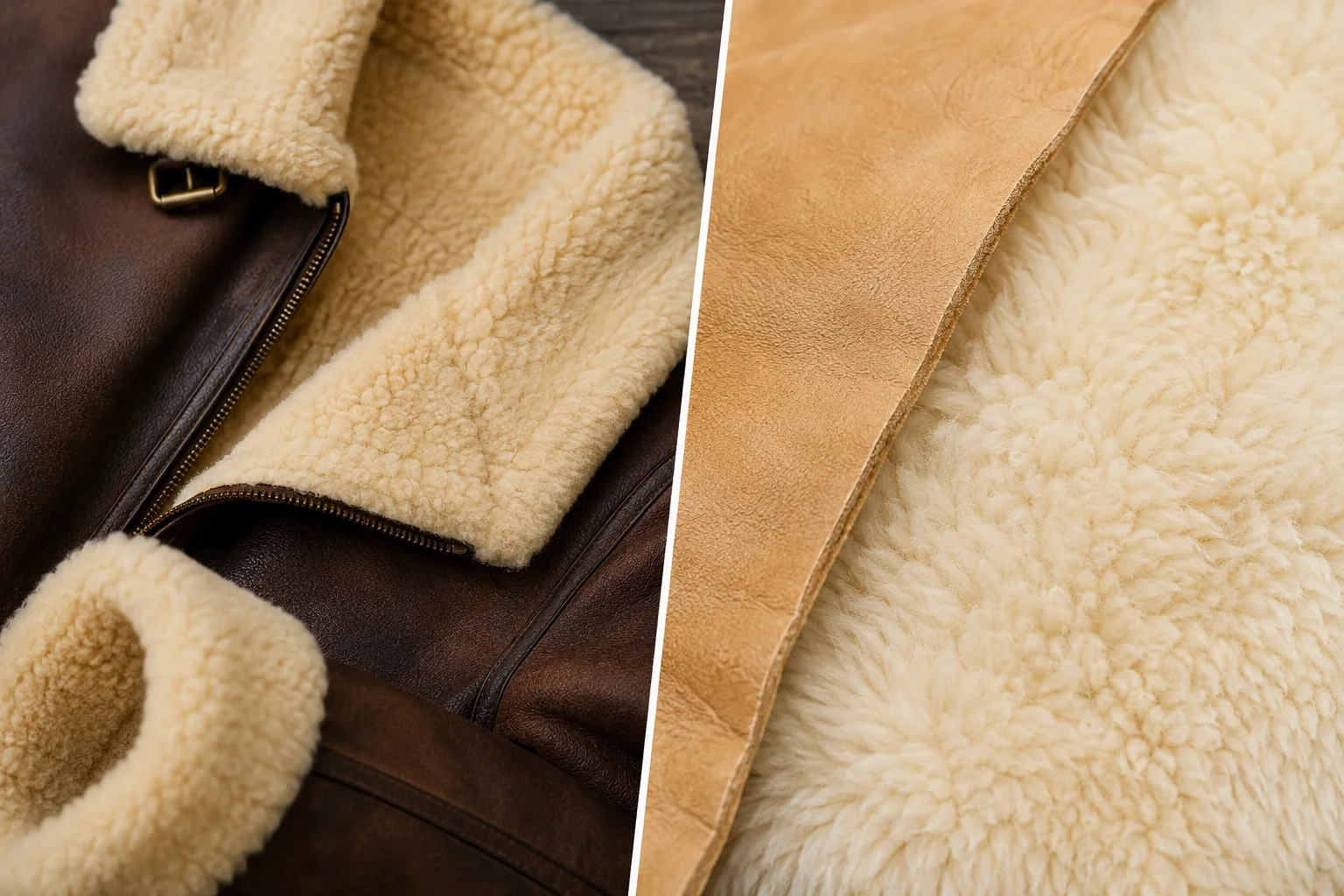
Shearling vs sheepskin comes down to this: sheepskin is the broad term for a sheep’s hide tanned with the wool still attached, while shearling is a specific type of sheepskin taken from a lamb or young sheep that’s been shorn only once, giving it a softer, more uniform wool layer. In other words, all shearling is technically sheepskin, but not all sheepskin qualifies as shearling. The distinction mostly comes down to the animal’s age and how many times it’s been sheared, which directly affects softness, texture, and price.
That’s the short version. Here’s what actually separates the two, and which one makes sense depending on what you’re buying.
Why These Two Terms Get Confused Constantly
Shearling and sheepskin come from the same source, a sheep’s hide with wool intact, so it makes sense that people use the terms interchangeably. Even a lot of retailers do it loosely. But according to Wikipedia’s entry on shearling, true shearling specifically refers to a skin from a recently shorn sheep or lamb that’s been tanned and dressed with the wool left on, distinct from the broader sheepskin category that can come from sheep of any age at any stage of wool growth.
That distinction matters more than it sounds like it should, because it affects everything from how soft the material feels to how much a jacket made from it actually costs.
What Is Sheepskin?
What is sheepskin, exactly? It’s the umbrella term. Sheepskin refers to a sheep’s hide tanned with the wool still attached, regardless of the animal’s age or how many times it’s been sheared before. The result is a dual-sided material, leather on one side, wool on the other, that’s been used for warmth and durability for centuries. Sheepskin covers a wide range of qualities and textures depending on the source, everything from thick, coarse pelts to finer, lighter ones.
Because sheepskin is such a broad category, quality varies a lot within it. Some sheepskin is rougher and more weather-resistant, while other varieties are finer and closer to what most people picture when they think of a soft, luxurious winter jacket.
What Is Shearling?
What is shearling, then, if it’s technically a type of sheepskin? Shearling specifically comes from a lamb or young sheep that’s been sheared just once, which produces a wool layer that’s more uniform in length, softer, and generally considered higher quality than sheepskin taken from an older or repeatedly shorn animal. The leather side is typically suede-finished rather than smooth, and the wool side is dense and even, which is what gives shearling its recognizable plush texture.
Essentially, shearling is the more refined, premium end of the sheepskin spectrum, defined by the animal’s youth and limited shearing history rather than being a completely separate material.
Shearling Leather vs. Sheepskin: The Real Breakdown
Since shearling is a subset of sheepskin rather than a competing material, the real comparison is more about grade and processing than a fundamental difference in what the material actually is.
Sheepskin (the broader category) can come from sheep of any age, with wool of varying length and density. It tends to be more affordable and more variable in quality, some pieces are excellent, others noticeably rougher.
Shearling is sourced specifically from young, once-shorn animals, giving it a consistently soft, even texture. It costs more, but that cost reflects a more controlled, premium sourcing process rather than just marketing.
Think of it less as “shearling vs. sheepskin” and more as “premium sheepskin vs. standard sheepskin.” That framing tends to clear up a lot of the confusion people run into when shopping.
Genuine Shearling vs. Sheepskin: How to Tell Which You’re Actually Buying
This matters most at the point of purchase, since listings don’t always use the terms precisely. A few things to check:
Feel the wool. Genuine shearling has a notably even, dense wool layer. If the wool feels patchy, thin, or inconsistent in length, you’re likely looking at a lower grade of sheepskin rather than true shearling.
Check the leather side. Shearling typically has a suede finish, soft, slightly napped. Standard sheepskin can vary more, sometimes smoother, sometimes rougher depending on the tanning process.
Ask about the source. Listings that specify lamb or young sheep, sheared once, are describing genuine shearling. Vague sourcing language is often a sign the product is sheepskin more broadly, not necessarily lower quality, but not the specific premium grade either.
Compare the price. Real shearling almost always costs more than standard sheepskin because of the more selective sourcing and processing involved. A shearling jacket priced suspiciously close to a basic sheepskin one is worth a closer look.
Is Shearling Real Sheepskin?
Yes, unambiguously. Is shearling real sheepskin is one of the more common questions people search, and the answer is straightforward: shearling is genuine sheepskin, just from a specific, younger source with a single shearing. It’s not a synthetic material or a separate animal product, it’s simply the premium end of the sheepskin category. What’s actually synthetic, and often confused with real shearling, is Sherpa fleece, a polyester fabric designed to mimic the look of shearling without any of the leather backing or natural insulation properties.
Shearling Jackets vs. Sheepskin Jackets: Which Should You Buy?
For shearling jackets vs. sheepskin jackets, the decision usually comes down to budget and how much you value consistency in texture and softness. A wool-lined jacket made from genuine shearling tends to feel noticeably plusher and more even throughout, and it typically ages better over years of wear thanks to the quality of the source material.
Standard sheepskin jackets can still perform very well, especially for genuinely cold climates where raw insulation matters more than refined softness. They’re also usually more accessible price-wise, which makes them a reasonable entry point if you’re not ready to commit to shearling’s higher cost.
Lambskin is worth mentioning here too, since it often gets pulled into this conversation. Lambskin generally refers to the tanned leather from a young sheep once the wool has been removed entirely, a different product from either shearling or sheepskin, since it’s leather-only rather than a wool-and-leather combination.
Do Shearling and Sheepskin Need Different Care?
Not dramatically, but there are a few small differences worth knowing. Both materials should be spot-cleaned rather than machine washed, since water and agitation can damage the leather backing and mat down the wool. Genuine shearling, because of its denser, more uniform wool layer, tends to hold its shape a bit better through gentle brushing, while coarser sheepskin varieties may need slightly more careful handling to avoid flattening unevenly.
Both benefit from occasional leather conditioning on the suede or leather side, and neither should be stored in sealed plastic, which traps moisture and can lead to mildew over time. A breathable garment bag and a cool, dry storage space work well for either material. The main practical difference tends to show up over years of wear: quality shearling generally holds its plush texture longer than standard sheepskin, simply because the wool it started with was more consistent to begin with.
Why Genuine Shearling Is Worth the Higher Price
The premium on shearling leather jackets isn’t arbitrary. Sourcing wool at a consistent length and density from young, once-shorn animals requires more selective, controlled processing than standard sheepskin does. That extra care shows up directly in how the finished garment feels and performs, better insulation, a more even texture, and generally better longevity when properly maintained. At Royalex Leather, our shearling pieces are handcrafted from genuine, properly sourced material for exactly this reason, the quality difference is real, not just a pricing gimmick.
Shop Genuine Shearling and Sheepskin at Royalex Leather
If you’ve decided which grade fits your needs, our Men’s Shearling Jackets collection is built from genuine leather and real, properly sourced sheepskin wool. Looking for a different silhouette in the same material? Our Women’s Flight Jackets line carries that same shearling-lined warmth in cuts built for a female fit. Want something longer and more formal? Check the Leather Coats collection, or browse our Biker Jackets for a completely different style built with the same standard of genuine materials.
Royalex Leather ships across the USA and worldwide, so wherever you’re shopping from, genuine shearling and sheepskin quality aren’t out of reach. You can also explore our full collection for everything else we handcraft.
Frequently Asked Questions
Is shearling the same as sheepskin?
Not exactly. Shearling is a specific type of sheepskin, sourced from a young, once-shorn sheep or lamb, while sheepskin is the broader term covering hides from sheep of any age with the wool still attached.
Is shearling real sheepskin?
Yes. Shearling is genuine sheepskin, not a synthetic material. What’s often confused with it is Sherpa fleece, a polyester fabric made to mimic shearling’s look without the natural wool or leather backing.
Which is warmer, shearling or sheepskin?
Both offer strong natural insulation, but genuine shearling’s more even, dense wool layer often provides slightly better, more consistent warmth compared to standard sheepskin.
Is shearling more expensive than sheepskin?
Generally, yes. Shearling’s more selective sourcing, young, once-shorn animals with consistent wool, makes it pricier than standard sheepskin, which can come from a wider range of sources and ages.
What’s the difference between shearling and lambskin?
Lambskin refers to tanned leather from a young sheep with the wool removed entirely, while shearling keeps the wool intact, making them different products despite both coming from young sheep.
Does Royalex Leather ship genuine shearling jackets internationally?
Yes. Royalex Leather ships genuine leather and shearling jackets across the USA and worldwide.
