




You pull your favourite leather coat out of the wardrobe after a season in storage — and it is covered in creases. Or you have packed it for a trip and it has come out of the bag looking like it slept there. Either way, the wrinkles are real and you want them gone.
The good news is that getting wrinkles out of a leather coat is entirely achievable at home — without expensive professional cleaning or any risk to the leather — provided you use the right methods. The bad news is that ironing it directly is not one of them.
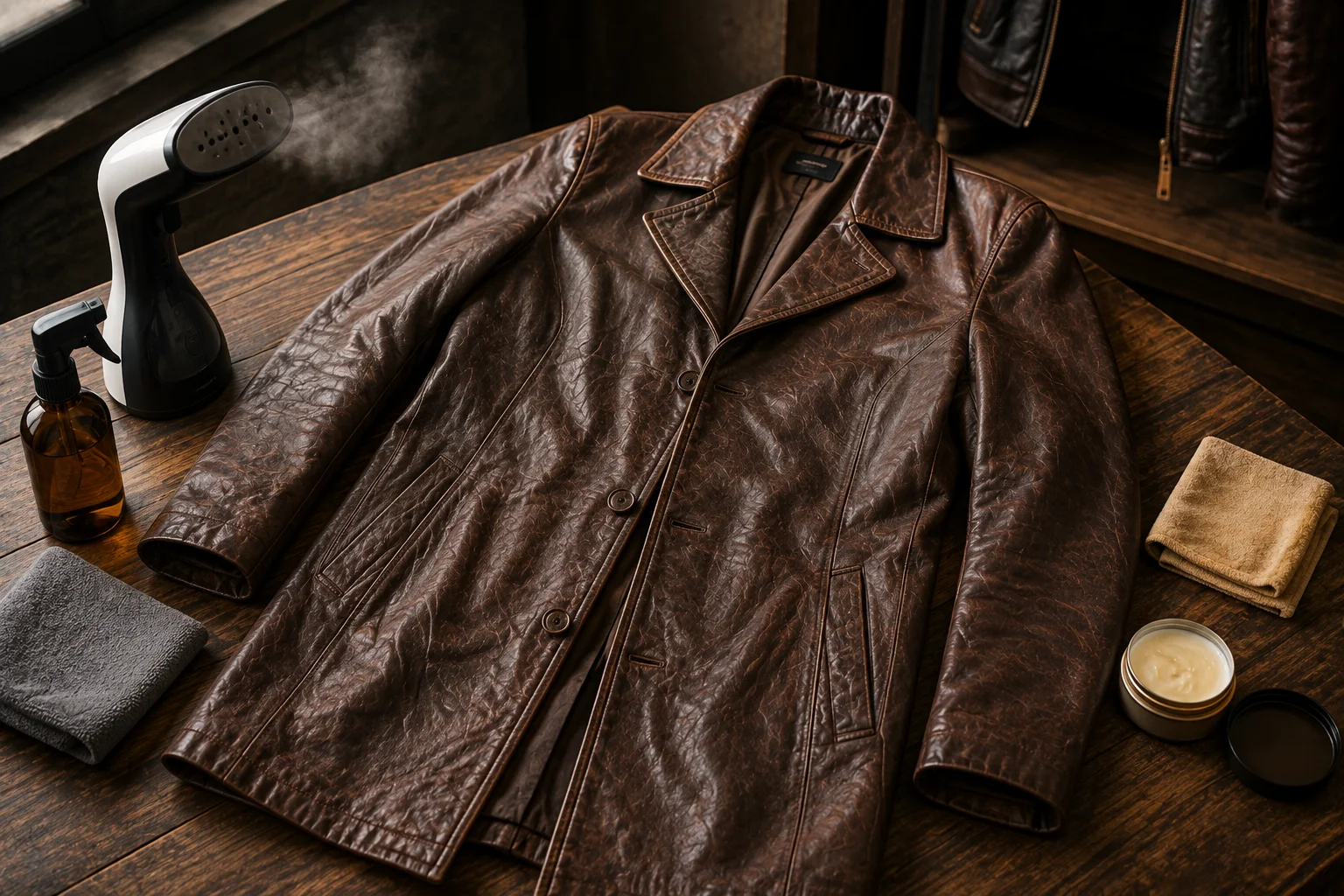
In this complete guide, we cover every safe, effective method for removing wrinkles from a leather coat or jacket, what to avoid, how to prevent wrinkles from forming in the first place, and how to keep your genuine leather coat in exceptional condition for years to come.
Why Does Leather Wrinkle?
Before we get into the removal methods, it helps to understand why leather wrinkles in the first place — because the cause shapes the solution.
Leather is a natural material that responds to its environment. Unlike fabric, which can be smoothed by moisture and heat relatively easily, leather has a structure that holds shape over time but creases when compressed, folded, or stored improperly.
The most common causes of wrinkles in a leather coat are:
Improper storage. Folding a leather coat rather than hanging it is the most common cause of creasing. Leather that is compressed at fold points develops permanent-looking creases that take time and effort to remove.
Packing. Rolling or compressing a leather coat in a suitcase or bag creates creasing at contact points — the same principle as improper storage, but faster and often more pronounced.
Dehydration. Leather that has lost its natural oils becomes stiffer and more prone to cracking and creasing. A well-conditioned leather coat is more supple and recovers from creasing far more easily than dry leather.
Natural wear. Over time, areas of frequent flexing — elbows, collar folds, the back panel when seated — develop wear creases that are part of the jacket’s natural character development. These are different from storage wrinkles and are generally considered desirable patina rather than damage.
Method 1 — Hanging (The First Step for Every Wrinkle)
The simplest, safest, and most universally effective method for removing wrinkles from a leather coat is also the most overlooked: hanging it correctly and giving it time.
Leather is a material with natural memory — it wants to return to its original shape when given the opportunity to do so. Many wrinkles and creases that appear severe after storage or packing will reduce significantly — and sometimes disappear entirely — simply by hanging the coat properly for 24 to 72 hours.
How to do it correctly:
Use a broad, padded hanger rather than a wire hanger. A wire hanger concentrates stress at the shoulder seams and can create new distortion points while the coat is hanging. A broad padded hanger distributes the weight evenly across the full shoulder, allowing the coat to hang naturally and the leather to relax into its correct shape.
Hang the coat in a well-ventilated area at room temperature — away from direct sunlight, radiators, and heat sources. Allow a minimum of 24 hours before assessing whether further treatment is needed.
For leather jacket storage in general, always hang your coat on a broad hanger in a cool, dry, ventilated space. This single habit prevents the majority of wrinkle-related issues before they start.
Does it work? For light to moderate creasing from recent storage, hanging alone often resolves 70–80% of the visible wrinkling. For deeper, more set-in creases from long-term improper storage, additional methods are usually needed.
Method 2 — Garment Steamer (The Most Effective Safe Method)
A garment steamer is the most effective tool for removing wrinkles from a leather coat at home — and it is significantly safer than any ironing method. Used correctly, steam relaxes the leather fibres and allows creases to release without any direct contact between a heat source and the leather surface.
What you need:
- A handheld or standing garment steamer
- A clean white cloth or thin towel
- A broad padded hanger
How to do it correctly:
Step 1 — Hang the coat. Always steam leather in a hanging position — never flat on a surface. Use a broad padded hanger and ensure the coat hangs freely with space around it.
Step 2 — Keep distance. Hold the steamer nozzle at least 6–8 inches away from the leather surface. Never allow the steamer to touch the leather directly — direct steam contact can cause water spotting, colour change, or surface damage.
Step 3 — Use a cloth barrier if needed. For extra caution — particularly with delicate or light-coloured leather — hold a clean white cloth between the steamer and the leather surface. This diffuses the steam further and prevents any possibility of direct water contact.
Step 4 — Use short bursts. Direct short bursts of steam at the creased areas rather than sustained application. Move the steamer continuously — do not hold it stationary over one spot.
Step 5 — Smooth with your hand. Immediately after steaming a section, use your hand to gently smooth the leather in the direction of the grain. The leather will be slightly warm and supple from the steam — this is the moment to encourage the crease to release.
Step 6 — Allow to dry completely. After steaming, allow the coat to hang undisturbed until it is completely dry before wearing or storing. This typically takes 30–60 minutes.
Step 7 — Apply leather conditioner. Steam removes some of the leather’s natural oils. Always follow up with a quality leather conditioning product after steaming to restore suppleness and protect the surface.
Does it work? For moderate to significant creasing, steam is highly effective. Most creases respond noticeably to even a single steaming session, and stubborn creases usually respond to a second treatment after 24 hours.
Method 3 — Bathroom Steam (No Equipment Needed)
If you do not own a garment steamer, your bathroom can serve as an effective steam environment for light to moderate leather coat wrinkles.
How to do it:
Hang your leather coat on a broad hanger — from a hook on the bathroom door or a shower curtain rail. Run the shower on its hottest setting with the bathroom door closed. Allow the steam to build for 10–15 minutes.
The steam in the bathroom creates a diffuse, gentle steam environment that relaxes the leather fibres without any direct contact. The effect is gentler than a dedicated steamer but often sufficient for light creasing.
After the steam session, remove the coat from the bathroom and allow it to hang in a well-ventilated room to dry completely. Follow up with leather conditioning once fully dry.
Important: Never allow the coat to be directly wetted by the shower. The coat should be in the steam, not in the water. Position it as far from the shower spray as the bathroom allows.
Method 4 — Warm Pressing (With Extreme Caution)
Direct ironing of leather is strongly inadvisable and can cause permanent damage — scorching, melting, flattening of the grain, and irreversible colour change. However, a carefully controlled warm pressing method can be used for stubborn, persistent creases as a last resort.
If you must use this method:
- Set your iron to the absolute lowest temperature setting — cool or silk settings only
- Never allow the iron to contact the leather directly under any circumstances
- Place at least two layers of clean white cotton cloth (such as a clean pillowcase) between the iron and the leather surface
- Work in very short passes — no more than 2–3 seconds of contact per area
- Keep the iron moving constantly — never hold it stationary
- Check the leather temperature with your hand after each pass — it should feel warm, not hot
- Test on a hidden area first
This method requires significant caution and is genuinely a last resort. For most wrinkle situations, hanging and steam are sufficient — and far safer.
Can You Iron a Leather Jacket? The Honest Answer
This is one of the most searched questions about leather jacket care — and the answer is: technically possible, but strongly not recommended.
Direct ironing with even a low-heat iron can cause immediate and permanent damage to leather:
- Heat damage: Leather dries and cracks when exposed to direct heat. Even moderate iron temperatures can cause irreversible surface damage.
- Grain flattening: The textured grain surface of genuine leather can be flattened permanently by direct iron contact, creating a shiny, compressed patch that looks nothing like the surrounding leather.
- Colour change: Heat can cause colour migration, bleaching, or darkening in leather — particularly in dyed or treated finishes.
If you are considering ironing your leather coat, the garment steamer is always the better choice. It achieves the same objective — relaxing the leather fibres to release creases — with none of the damage risk.
The Role of Leather Conditioning in Wrinkle Prevention
Leather conditioning is not just a care routine — it is the most powerful wrinkle prevention tool available for your coat. Here is why.
Dry leather is inflexible leather. When the natural oils that keep leather supple are depleted — through age, heat exposure, cold weather, or simply the passage of time — the leather becomes stiffer and less able to recover from compression and folding. Creases form more easily and release more reluctantly.
Well-conditioned leather is the opposite. Supple, well-oiled leather flexes and recovers far more naturally. When a well-conditioned coat is stored improperly or packed in a bag, it will still crease — but those creases will release much more readily when hung or steamed.
How to condition correctly:
Apply a specialist leather conditioning product — a cream or oil formulated specifically for leather garments — every three to six months. Apply a small amount to a clean soft cloth and work it into the leather in gentle circular motions. Allow it to absorb fully before buffing with a separate clean cloth.
For genuine leather coat care, conditioning is as important as cleaning. A leather coat that is cleaned but never conditioned will dry out, become stiff, and develop surface cracking far sooner than one that is regularly conditioned.
At Royalex Leather, we build our men’s leather coats and women’s leather coats from premium genuine hides that respond exceptionally well to regular conditioning — developing richer character and greater suppleness with every application.
How to Steam a Leather Jacket — Step-by-Step Summary
For quick reference, here is the complete garment steamer method for removing wrinkles from a leather coat:
- Hang the coat on a broad padded hanger in open space
- Fill your garment steamer and allow it to reach full temperature
- Hold the steamer 6–8 inches from the leather surface — never touching
- Use short steam bursts, moving the nozzle continuously
- Use a white cloth barrier for extra protection on delicate leather
- Smooth each section gently with your hand immediately after steaming
- Allow the coat to hang undisturbed until completely dry (30–60 minutes)
- Apply a leather conditioner once fully dry
- Hang correctly for storage — never fold
How to Store a Leather Coat to Prevent Wrinkles
The best wrinkle treatment is prevention. Here is how to store your leather coat correctly to avoid creasing in the first place.
Always hang — never fold. Folding a leather coat creates immediate compression creases at fold points. For any storage period longer than a day or two, hanging is always the right approach.
Use a broad padded hanger. A coat hanger with broad, padded shoulders distributes weight evenly and maintains the coat’s shoulder structure. Wire hangers are a primary cause of shoulder distortion and sleeve creasing.
Store in a breathable garment bag. If you are storing your coat for a season, use a breathable fabric garment bag — not a plastic dry-cleaning bag. Plastic traps moisture and can cause mildew or surface damage on genuine leather over extended storage periods.
Keep it away from direct sunlight and heat. UV exposure and heat sources both degrade leather over time, accelerating the development of surface cracking that makes creasing more likely and harder to reverse.
Condition before storage. If you are putting your coat away for the season, apply a leather conditioner before storage. This ensures the leather remains supple throughout the storage period rather than drying out in a wardrobe.
Give it space. Avoid cramming a leather coat into a full wardrobe where it will be compressed against other garments. It needs space to hang freely.
Leather Jacket Cleaning — What You Need to Know
Beyond wrinkle removal, overall leather jacket cleaning is an important part of keeping your coat in top condition.
Surface dirt and dust: Wipe away with a clean, slightly damp cloth — wiping with the grain of the leather rather than against it. Allow to dry naturally and follow up with a conditioner.
Stains: Treat stains immediately — the longer a stain sits on leather, the harder it is to remove. For fresh marks, a slightly damp cloth with very mild soap can be effective. For deeper or older stains, a specialist leather cleaner is the safest approach.
Never machine wash: Machine washing destroys leather — it strips the natural oils completely, causes significant shrinkage, and permanently damages the surface finish. Always clean leather by hand or through a specialist leather cleaner.
Professional cleaning: For significant soiling or staining, a specialist leather cleaner or leather restoration service is always worth the investment. The cost of professional cleaning is small compared to the cost of replacing a quality leather coat.
Leather Coat Care — The Complete Maintenance Checklist
Follow this routine and your leather coat will maintain its quality for decades:
| Task | Frequency |
|---|---|
| Wipe surface clean | After each wear as needed |
| Apply leather conditioner | Every 3–6 months |
| Apply leather protector spray | Every 3–6 months |
| Check hardware (zips, snaps) | Seasonally |
| Professional clean if needed | Annually or as required |
| Inspect for dry patches or cracking | Before and after storage |
| Hanging storage check | Ongoing — always hang, never fold |
A leather protector spray — applied after conditioning — adds an additional layer of protection against water, staining, and UV degradation. It is a quick and inexpensive step that meaningfully extends the life of your coat and reduces the frequency of conditioning needed.
Shop Premium Leather Coats at Royalex Leather
At Royalex Leather, every coat in our collection is crafted from premium genuine leather — built to reward proper care with decades of exceptional wear and ongoing character development.
Our leather coat collection includes:
- Men’s Leather Coats — shop the full collection — classic, trench, car coat, and long styles in genuine leather
- Women’s Leather Coats — shop the full collection — elegant, structured, and contemporary long styles
- Men’s Biker Jackets — shop now — the most care-rewarding jacket style in leather
- Women’s Biker Jackets — shop now
- Men’s Bomber Jackets — shop now
- Women’s Bomber Jackets — shop now
- Shearling Jackets — shop men’s shearling — premium warmth that rewards conditioning and care
Every jacket ships free worldwide — to the USA, UK, Europe, Canada, Australia, and beyond — with up to 25% off on selected styles in our current sale.
Shop All Men’s Leather Jackets | Shop All Women’s Leather Jackets | View Current Sale
Frequently Asked Questions (FAQs)
Q1: How do you get wrinkles out of a leather coat?
The most effective and safest methods are: hanging the coat on a broad padded hanger for 24–72 hours (works for light creasing); using a garment steamer held 6–8 inches from the surface with short bursts (works for moderate to significant creasing); or using bathroom steam as a gentler alternative. Always follow any wrinkle treatment with a leather conditioner to restore suppleness and protect the surface.
Q2: Can you iron a leather jacket to remove wrinkles?
Direct ironing of a leather jacket is strongly inadvisable and can cause permanent damage — including scorching, grain flattening, and irreversible colour change. If you must use a pressing method, place at least two layers of clean cotton cloth between the iron and the leather, use the iron’s lowest possible temperature setting, and work in very short passes. A garment steamer is always the safer and more effective alternative.
Q3: How do you use a garment steamer on a leather jacket?
Hang the jacket on a broad padded hanger. Hold the steamer 6–8 inches from the leather — never touching. Use short steam bursts, moving the nozzle continuously. Optionally use a white cloth as a barrier between the steamer and the leather. Immediately after steaming each section, smooth gently with your hand. Allow the jacket to dry completely (30–60 minutes) before conditioning and storing.
Q4: Does leather conditioning help prevent wrinkles?
Yes — significantly. Well-conditioned leather is more supple and flexible, which means it recovers from compression and folding far more readily than dry, under-conditioned leather. Regular conditioning every three to six months is the most effective wrinkle prevention measure available for a leather coat. It also protects against cracking, fading, and surface degradation over time.
Q5: How should you store a leather coat to prevent wrinkles?
Always hang a leather coat on a broad padded hanger — never fold it. Store it in a cool, well-ventilated space away from direct sunlight and heat sources. Use a breathable fabric garment bag for seasonal storage — not a plastic dry-cleaning bag. Condition the coat before any extended storage period. Give it enough wardrobe space to hang freely without compression from surrounding garments.
Q6: How do you remove set-in wrinkles from a genuine leather coat?
For deep, set-in wrinkles from long-term improper storage, start by hanging the coat for 48–72 hours. Then apply the garment steamer method — short bursts at 6–8 inches distance, smoothing immediately with your hand after each section. Allow to dry and condition. Repeat after 24 hours if the creases are still visible. For extremely stubborn wrinkles, consider consulting a professional leather cleaner or restoration specialist.
Q7: What leather care products do you need for a leather coat?
The essential leather maintenance products are: a specialist leather conditioner (applied every 3–6 months to maintain suppleness and prevent cracking), a leather protector spray (applied after conditioning to repel water and staining), and a specialist leather cleaner for surface dirt and staining. Avoid generic household cleaners, silicone sprays, and petroleum-based products — these can damage leather finishes.
Q8: Where can I buy a premium leather coat that lasts?
Royalex Leather offers a comprehensive range of genuine leather coats and jackets for men and women — crafted from premium leather hides that reward proper care and conditioning with decades of exceptional wear. Available with free worldwide shipping, up to 25% off in our current sale, and a full range of styles from classic leather coats to biker, bomber, and shearling jackets. Shop our men’s leather coats, women’s leather coats, or explore all styles at Royalex Leather.
