




Buy lambskin if you want a soft, light jacket that you’ll wear often in mild weather. Buy cowhide if you want the toughest jacket for your money and plan to keep it for a decade or more. That’s the short answer to the lambskin vs cowhide leather jacket question, and it holds whatever your budget looks like. The price tag matters less than how you’ll actually wear the jacket, so the rest of this guide helps you match each leather to your wardrobe, your climate and your wallet.
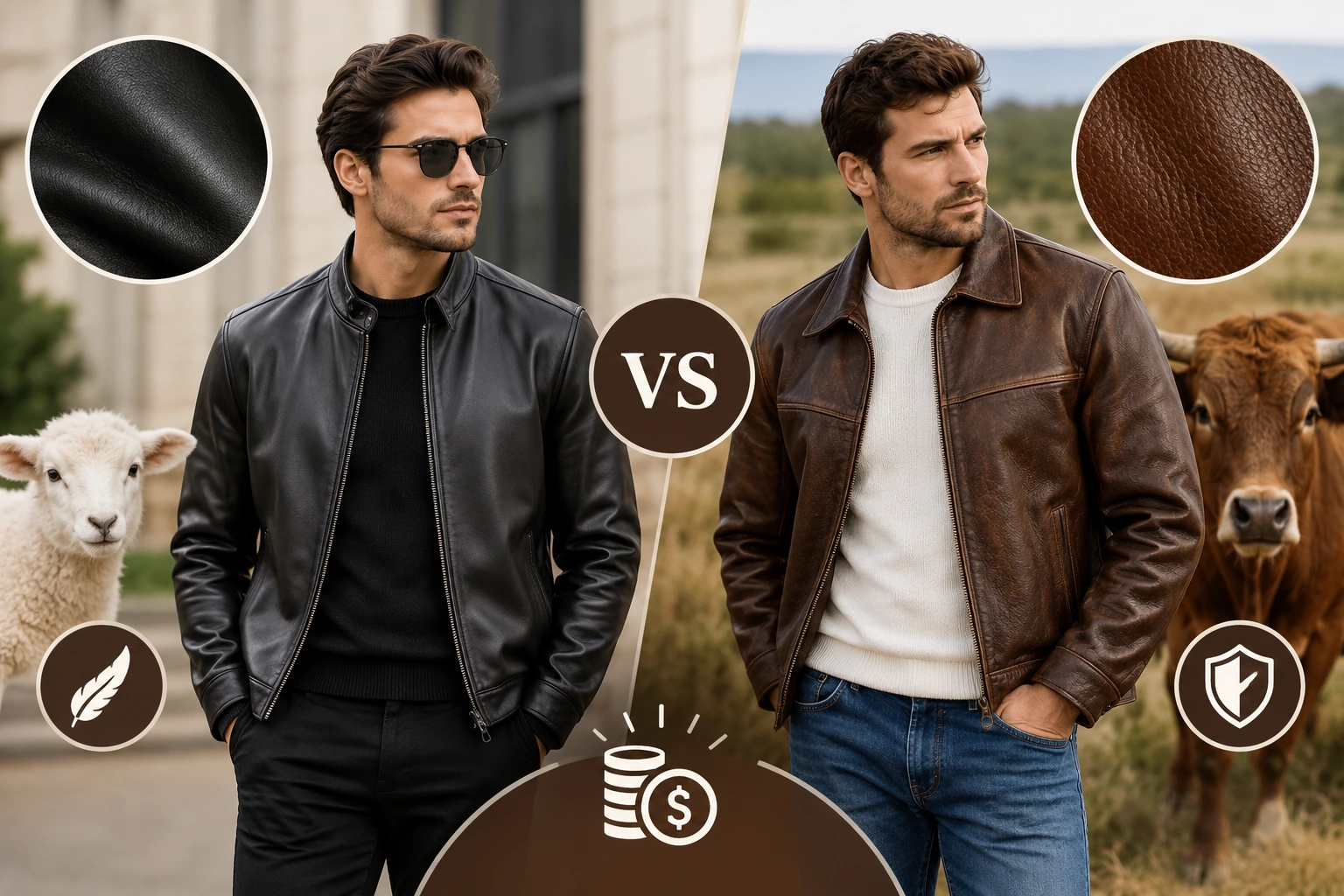
Lambskin vs Cowhide at a Glance
Here’s how the two leathers compare on the points that matter most. The figures are typical ranges from published comparisons, so individual jackets will vary with tanning and construction.
| Lambskin | Cowhide | |
|---|---|---|
| Thickness | 0.5 to 0.8 mm | 1.0 to 1.4 mm |
| Jacket weight | 0.8 to 1.2 kg (1.8 to 2.6 lb) | 1.5 to 2.5 kg (3.3 to 5.5 lb) |
| Feel | Buttery soft from day one | Firm at first, softens with wear |
| Break-in | Around 5 to 10 wears | Around 15 to 20 wears |
| Lifespan with care | Roughly 10 to 25 years | Roughly 15 to 50 years |
| Best for | Blazers, bombers, fashion pieces | Bikers, moto styles, cold weather |
What Is a Lambskin Leather Jacket?
A lambskin leather jacket comes from the hides of young sheep. The skin is thin, with a fine grain and a smooth surface, so it drapes well and feels light on the shoulders. That’s why designers like it for sleek blazers and slim bombers.
The thinness cuts both ways. Lambskin scuffs more easily than thicker leather, and it soaks up water faster. You can still wear it for years, but you’ll treat it a little more gently.
What Is a Cowhide Leather Jacket?
A cowhide leather jacket uses hide from adult cattle. It’s thicker and more fibrous, which gives it the sturdy, structured look people picture when they think “leather jacket.” Some comparisons put cowhide at three to five times the tensile strength of lambskin, and that matches what most owners notice. The jacket resists scrapes, wind and daily abuse.
The cost is weight and a slower start. A new cowhide jacket feels stiff for the first few weeks. After that, it molds to your shoulders and elbows in a way thinner leather never quite does.
Softness: The Softest Leather for Jackets
Lambskin wins this one, and it isn’t close. If you want the softest leather for jackets, you’ll find it here, and the lambskin leather softness is obvious the moment you try one on. It needs almost no break-in, so you can wear it comfortably on day one.
Cowhide softens too, just on a longer timeline. If you’re patient, a well-worn cowhide jacket can feel wonderful. If you want comfort immediately, choose lambskin.
Lambskin vs Cowhide Durability
Cowhide wins on strength, and this is where the two leathers separate most clearly. Cowhide leather strength shows up in abrasion resistance, tear resistance and overall lifespan. That’s why bikers, workwear and heavy outdoor jackets lean on it. When it comes to cowhide leather jacket durability, the thicker hide also forgives rough handling better.
Still, use matters as much as material. A lambskin jacket worn to the office and dinner will face far less stress than a cowhide jacket worn on a motorcycle. And care has a big say too: a well-conditioned lambskin jacket can outlast a neglected cowhide one. So the lambskin leather jacket durability question is really about how hard you plan to wear it. For occasional and everyday fashion wear, lambskin holds up fine. For heavy use, cowhide is safer.
Lambskin vs Cowhide Price: What You’ll Actually Pay
This is where published advice contradicts itself. Some guides say lambskin costs more because it’s a premium, softer material. Others say cowhide costs more because it’s thicker and lasts longer. Both claims can be true, because the price depends on the grade of leather and the quality of construction more than on the animal.
A few things explain the mess:
- Cowhide is plentiful, so budget cowhide jackets exist at low prices.
- Heavy, full-grain cowhide from a good tannery costs more than cheap leather of either type.
- Fine lambskin costs more per square foot, but a lambskin jacket uses less material overall.
So don’t pick by animal. Pick by grade, and compare jackets of similar quality side by side.
Think in Cost per Wear
A simple calculation helps. Say you buy a $250 lambskin jacket and wear it 80 times a year for 10 years. That’s 800 wears, or about 31 cents each. Now say you buy a $350 cowhide jacket and wear it 40 times a year for 20 years. That’s also 800 wears, or about 44 cents each. The numbers are made up, but the lesson holds: a comfortable jacket you wear constantly can be cheaper per wear than a tougher one that sits in the closet.
Weight, Warmth and Weather
A lambskin jacket weighs roughly 40 to 50 percent less than a comparable cowhide one. That makes it a better choice for long days, travel, and milder climates. Cowhide is heavier but blocks wind well, so it suits cold winters like those in the northern US, Germany or Norway. Neither leather is warm by itself, so plan on layering underneath in real winter weather.
Leather Grain and Texture
Lambskin has a fine, tight grain and a smooth, almost silky surface. Cowhide has a more visible, slightly coarser grain, and it often carries natural marks or a crinkled finish that gives it character.
The grade matters here too. Full-grain leather keeps the natural surface of the hide and ages best. Top-grain is lightly sanded for a more even look, and it’s the grade many quality jackets use. Corrected-grain is heavily sanded and embossed, which is cheaper but wears less gracefully. When a listing only says “genuine leather,” ask which grade it is, because the phrase technically covers some of the lowest-quality leather sold.
Care and Maintenance for Each Leather
Both leathers respond to the same basic routine, with lanolin or beeswax-based conditioners. Condition them a couple of times a year, wipe off dirt with a soft cloth, and hang the jacket on a wide, shaped hanger.
Lambskin needs a gentler hand because it absorbs moisture more readily. If it gets caught in the rain, blot it, let it dry naturally away from heat, then condition it. Cowhide handles damp better, though you should still keep it away from radiators and hairdryers. Good care extends the leather jacket lifespan of either type more than the leather choice itself.
Quality and Craftsmanship Matter More Than the Animal
A well-made jacket in either leather beats a badly made one in the “better” material. Before you buy, check a few things:
- Stitching: Look for even, tight seams with no loose threads, especially around the collar, cuffs and armholes.
- Lining: A smooth, well-attached lining makes a jacket far more comfortable and protects the leather.
- Hardware: Zippers should glide, and snaps and buckles should feel solid, not tinny.
- Fit: Leather doesn’t stretch much, so a jacket that fits well off the rack will always look better than one that needs altering.
Our own guides cover related ground, including what bomber jackets are made of and the difference between shearling and sheepskin, if you want to go deeper on materials.
Which Leather Suits Which Style?
Matching the leather to the style saves you from a poor fit between how a jacket is built and how you’ll wear it.
- Biker and moto jackets: Cowhide is the natural choice, because the structured shape depends on thicker leather. Browse our men’s biker jackets, including the quilted cowhide biker jacket.
- Bomber jackets: Either leather works. Lambskin gives a slimmer, softer look, while cowhide gives a sturdier one. See our men’s bomber jackets.
- Blazers and coats: Lambskin drapes better, which suits tailored pieces. Take a look at our leather coats.
- Women’s jackets: The same rules apply, so match the style first, then the leather. Our women’s jackets cover the full range.
Choosing by Budget
Use your budget to decide how much compromise you can accept.
- Tight budget: Choose top-grain cowhide in a classic style like a black or brown biker. It’s usually the best value for years of wear, and one dependable jacket beats two cheap ones.
- Middle budget: Choose lambskin if you value comfort and wear the jacket often, or pick a thicker cowhide if you want something that lasts longer than any trend.
- Generous budget: Look for full-grain leather in either type, and let your lifestyle break the tie.
If you want to stretch your money, our sale page is worth a look this fall 2026. Offers change, so check the banner for the current discount.
For a neutral overview of how leather is made and graded, the leather entry on Wikipedia is a useful reference.
Find the Right Leather With Royalex Leather
At Royalex Leather, we make and sell leather jackets for men and women across the USA and Europe, with Canada and Australia on our regional menu, and we offer free worldwide shipping. If you can’t decide between lambskin and cowhide, the fastest fix is to tell us how you’ll wear the jacket. We’ll point you to the right one.
Browse the full men’s collection, or message our team through the contact page with your questions. Check the material line on each product page before you order, and ask us if it isn’t clear.
Frequently Asked Questions
Which is better, lambskin or cowhide leather jackets?
Neither wins outright. Lambskin is softer and lighter, so it suits everyday fashion wear in mild weather. Cowhide is tougher and heavier, so it suits heavy use, biker styles and colder climates.
Is lambskin or cowhide more expensive?
It depends on the grade. Fine lambskin often costs more per square foot, while heavy full-grain cowhide can cost more per jacket. Budget cowhide is also common, so compare jackets of similar quality rather than assuming one animal costs more.
Which leather is more durable, lambskin or cowhide?
Cowhide is more durable. It’s thicker and more resistant to abrasion and tearing, and published figures suggest it can last 15 to 50 years with care, compared with roughly 10 to 25 for lambskin.
Which is the softest leather for jackets?
Lambskin is the softest common jacket leather. It feels supple immediately and needs only a few wears to break in.
Does lambskin wear out faster than cowhide?
Lambskin marks and scuffs more easily and absorbs water faster, so it needs gentler care. With proper conditioning and sensible use, it still lasts many years.
How long does a leather jacket last?
A well-made, well-cared-for leather jacket can last decades. Commonly cited ranges are 10 to 25 years for lambskin and 15 to 50 years for cowhide, though care and how often you wear it affect both.
Is lambskin real leather?
Yes. Lambskin is genuine leather made from young sheep hides. It’s simply thinner and softer than cowhide, not a cheaper or synthetic alternative.
Which leather is better for a biker jacket?
Cowhide. A biker jacket relies on thick, structured leather for its shape and protection, and cowhide holds that shape better than lambskin.
